Article Page
Protecting Speech in a Democracy: A Conversation with Megan Chopra
Published by Keshav Arun on July 3rd, 2026


Privacy Notice
All quoted materials on this page are reproduced verbatim from Megan Chopra. Minor formatting adjustments may be made for readability. All quoted material remains the property of its respective authors, speakers, or copyright holders and is provided for educational, research, and commentary purposes.

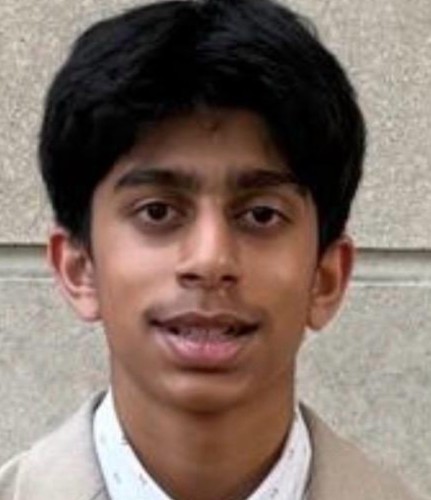
Megan Chopra
Megan Chopra is a Columbia University undergraduate and Online Lead Editor at the Columbia Undergraduate Law Review. Her work centers around speech restrictions, and why they’re crucial to democracies.
Why Does Free Speech Matter?
Speech is the cornerstone of democracy, and almost every American is aware about the first amendment and what it means to have free speech. When asking Megan on what how her perspective has developed throughout her continuous research, she stated,
"I think something I learned that I carry with me regarding the protection of free speech is how important it is to protect free speech that we don't agree with, even what one could deem hate speech, because once anyone's rights are curtailed, all of ours are on the chopping block." This is significant, because it illustrates how even if only a minority of the population is affected, that specific injustice allows the governments to exert that same oppression on many more, leading to an authoritarian government.
She goes further to state, "It is a pattern with what we are seeing in the federal administration doing continually, which is breaking from precedent and our constitutional rights, while really weaponizing federal power and positions." Once we cross-apply this to incidents like when Burma's military claimed voting fraud and ceased power by calling it a national security threat, it demonstrates legitimate occurrences of national security being prioritized over civil liberties, as to date, Burma still remains an authoritarian government.
However, when Columbia University protests were taking place in full force, it was able to be restricted. When Megan was asked why it was able to be restricted, and why can speech in general be restricted she replied, "We protect free speech unless it is inciting violence, and from my research, much of what we saw with the Columbia protests did not meet that threshold. It is also very contextual. Saying something in one environment versus another can be interpreted differently and seen differently under law. Part of what makes the US in particular a really unique county is how strong our protections of the first amendment are and it is really important it is upheld. For example, criticism of any government, including our own, should not be censored."
Having established why security shouldn't be prioritized, it raises the question:
When Can Security Be Prioritized?
Times of injustice have been illustrated in Megan's paper, "Executive Overreach of Title VI: Censoring Campus Speech." where she explained, "Title VI of the Civil Rights Act of 1964 prohibits racial and ethnic discrimination in programs that receive federal funding. Since the Supreme Court ruling in Davis v. Monroe County Board of Education (1999), the Department of Education has interpreted Title VI to prohibit federally funded schools from tolerating what the agency has termed a “racially hostile environment.”" This is exactly a time of a tradeoff, when our sovereign rights can be infringed upon because of a certain safety requirement.
Though most times security should not take precedence, as the resolution is speaking about Democracies, not just the United States, or democracies with huge military budgets, African countries that face Ebola outbreaks may have to take similar measures described by Megan when she stated,
"During covid, some of our liberties were suspended but it was very justified by the threat at hand and was limited to when the pandemic was occurring. It is worth wearing masks to save lives. So these restrictions/suspensions must be necessary, proportionate, and limited in time."
This is significant because it highlights a more broad perspective of worldwide democracies, like Burkina Faso.
During 2016 - 2021, Burkina Faso had the civil liberties of speech, press, assembly, and religion, it was considered the most democratic period of its time, with free and fair elections throughout the period. Yet, in 2022 it was in the brink of death, it had Islamist insurgents coming in everyday and ruthlessly murdering the people of their nation. In this scenario, it is far more likely democracy will survive by prioritizing national security, than civil liberties. Though civil liberties are important 99% of the time for democracies. In times like these, if we do not prioritize national security in this 1%, we will not have civil liberties in that 99%.
Can a Liberty-less Country Be Considered Democratic?
To truly understand and evaluate this resolution, we must first ask ourselves what will happen if there is no civil liberties, or if a democracy can still remain democratic even after infringing on civil liberties. When we asked Megan this question, she explained, “Yes, I would still characterize for example the US as a democracy, even though I believe our government has done undemocratic things, violated international law, etc. But, that leaves room for lawsuits and reparations. People’s civil liberties are violated often, but there must continue to be legal mechanisms to resolve that and precedent will continue to evolve to ensure they happen less and less. Look into the Knight Institute to see their work doing just that.”
This explains the core purpose of democracies, and the culture of democracies. If we examine the United States, we see a sense of patriotism on asserting our fundamental rights of speech and assembly.
When the February and June 2025 ICE deportations skyrocketed, people took to the streets of Los Angeles and roared against the severity of deportations. When segregation and Jim Crow laws were supposed to be considered, “a fact of life” Martin Luther King Jr. marched on Washington and gave his famous, “I have a dream,” speech in outrage, then two years later he took to the streets from Selma to Montgomery. These are perfect examples of democratic people, because even if countries may suspend civil liberties, it is the people that hold these leaders accountable.
Megan Chopra is a current undergraduate at Columbia University and Online Lead Editor at the Columbia Undergraduate Law Review. Her work centers around speech restrictions, and why they’re crucial to democracies.
